
Hello again, everybody… I don’t know why you’d be here unless it’s been another month. I feel like last Month in Review was only 28 days ago.
I say this a lot, but wow, this month blew by, while simultaneously being gruellingly slow.
But! Once I check what I did this month, I’m sure it was a lot! Probably…
First things, first. Health and Burnout.
Eww, I know. But this was something that I have been stricken by all month, and I don’t think there’s ever “too many times” to talk about it.
Life is an incredibly imperfect process, while we can try to stack the deck in our favour, and be lucky for periods of motivation, clarity, and stability; we will also invariably run into the opposite: The house of cards has fallen, the luck has run dry, and we’re left living anyways.
I suffer from bipolar, thankfully on the more manageable side. Usually, I can ride along with it; medication keeps it stable, and you just roll with it as it comes. Often I’ll be fatigued, other times motivated, but also having some insomnia. One way or another, with enough experience in the matter, you can take the hits as they come.
This month? What a rollercoaster. Feeling all the emotions all at once, where the slightest change of topic of thought would make any one feeling take predominance. Feeling like it’s time to cry, being sick to my stomach with fear for my future, being aggravated and impatient. Over and over and over.
Why am I sharing this?
Because, at Genome Studios, we really try to stand by our beliefs regarding work-life balance and health. Time and time again, I’m reminded that one cannot begin to speculate how even your next day will go, let alone deep distances into the future. Turns out, you can be having a fantastic week, great health, great whatever, and then have it all slip through the cracks in an instant. Other times, you aren’t feeling all too great over the weekend… and then you don’t feel all too great during the week, and then the following weekend, and then you’re on an emotional rollercoaster the next week, and then so short-tempered you want to yell at everyone for every reason.
We have a very pliable work schedule for this very reason. Regulating and balancing one’s health is a moment-by-moment process, and sometimes you really just need to call it and change your plans for the day. Time and time again, my team members and I have had to just flat out say: “Yesterday/Today is a complete wash, I feel like hell, going to get back to it tomorrow.” And time and time again, we do return to the grind, ready and able.
I see it proven all the time: Being able to respond immediately to one’s health and circumstances, and deal with it without judgment, always results in a person being far more able to return to the work, as well as respect their role and be sure to deliver on their tasks when they catch back up. I mean to say that sometimes we’ll fill in the absence on a Friday, or grill through the feature by our Thursday clockout, or neither. But all in all, our work paves forward, we keep at it, and I can’t say I’ve noticed any marked loss of quality or progress in spite of handling health in these ways. And whatever the rebound may look like, it’s up to the person, not anyone else, to decide how it comes to be.
Now about my health in particular.
Like I’ve said many times before, and allude to above, it’s always valuable to catch when you’re feeling unwell, and/or burnt out. And truly, it’s best to err on the side of pause and restoration. But I also find myself in an ever-growing position of pressure. Trying to prop up a business, and meet internal and external schedules and demands is incredibly demanding, but also puts your obligation into the external, meaning it’s not so easy to just call a week wasted and catch up next.
Because of that, during all this health turbulence, I did still push to work and get things done. Which is the antithesis of what I’ve been talking about in this and many other discussions on this topic.
I share this because I think there’s some nuance that might be able to help in these circumstances.
Feeling proud of your progress, and feeling like you, while taking those breaks, still stepped up and delivered on what you feel is quality work boils down to doing your best.
And I don’t know about you, but I usually feel that doing my best is the ironic “110% effort” thing.
But I think it misses a very valuable point: If doing your best lands you at 10% effort. Then you did do your best, and you did exceed your otherwise standing effort. That 10% effort could arguably be 200%-300% in truth.
In that, I have found that even during these foggy, upset, total washes of days, I was able to still step up to the plate and swing for SOMETHING, ANYTHING, and feel like I didn’t just completely drop the ball.
It does still come from a place of “pushing it,” which isn’t great to do all the time. But I think it’s about finding a middle line you can respect in your efforts, while still taking care of your well-being. If it can be something that you can recognize and appreciate in yourself, both for dialling things down, but also not completely giving up, you can hopefully alleviate the pressure and judgement of not being your best, but also not feel like you’re dropping the ball.
I don’t know what the magic balance is, but somehow today I feel actually capable. Despite feeling dread about how well I’d feel entering the week.. Things seem totally fine. How? Maybe because I cleared some things that were driving me crazy last week. Maybe because I totally checked out this weekend… but the circumstances I am in, and the work I’m currently tasked to do, does not daunt me or knock me down like it has been this month. And that’s thanks to what I was able to accomplish, even though I was not at my best.
Now on to the daunting crushing work of the month! Yay!
We begin with a medley of Infrastructure server things. I fixed an issue that arose from our engine build pipeline, as I needed to push through a new engine build. Why? Because our resident champion Nick put together that lingering feature task I had claimed I would likely need to do last month!
Yesssss, one less thing on my plate!
Next, we tackled a random lingering thing that needed to be done eventually…
Enabling GitLab Pages. With this feature, you can use this website generator tool, Hugo, to format a website using markdown and some commands, and it’ll build into a full website. By using GitLab pipelines and pages, you can make an automatic deployment that takes your updates, rebuilds, and publishes them all for you! So cool.
Now how did we accomplish this? Magic.
Like literally: hackey, totally irrational, magic.
Many open source tools have support for the “Reverse Proxy”, Nginx, the one I too use for hosting multiple services on the same IP.
GitLab does aswell. But did we use that? Not at all. We had no idea how to get it to actually work. No matter what we tried with pages settings, nginx, and GitLab settings, the url to our new website would lead to the GitLab login page, which is not at all what we wanted.
For whatever reason, there’s an option in your pages that allows you to set a custom URL, much like in GitHub, BUT, it’s disabled when you’re using http, instead of the secure https. This is an issue because the nginx system actually handles the certificate and making the url https. So it IS, but it ISN’T.
Our solution?
My colleague Mike and I determined we have to: Enable the https, which breaks everything, set the custom link, get the special codes and things that you use to pass the url connection to the pages page, then disable the https, and revert whatever other settings, and then it works…
Yeah… it seems to record that custom url even though it’s disabled, and then doing the http again makes it so the proxy DOES handle the secure connection… and magically.. it all works…
Later, I tried to set up a second pages site. How? Enable the settings, reset GitLab, register the link, get the link codes, set up everything, disable the settings, reset GitLab… Boom, magic!
If it works… it works… /shrug
Heading off our next topic.
Unspoken project we’re working on that we can’t talk about, but is soooo cool. Like SOOO cool…
Is still underway, and still coming along. I could remark about it every time it comes up in this month’s timeline, but just trust. It’s so cool, it’s so coming along, and it’s so much something I want to talk about. But I must remain silent. Shauna is doing a great job as always.
Into the brunt of the work I have been responsible for this month!
DOCUMENTAATIONNN….
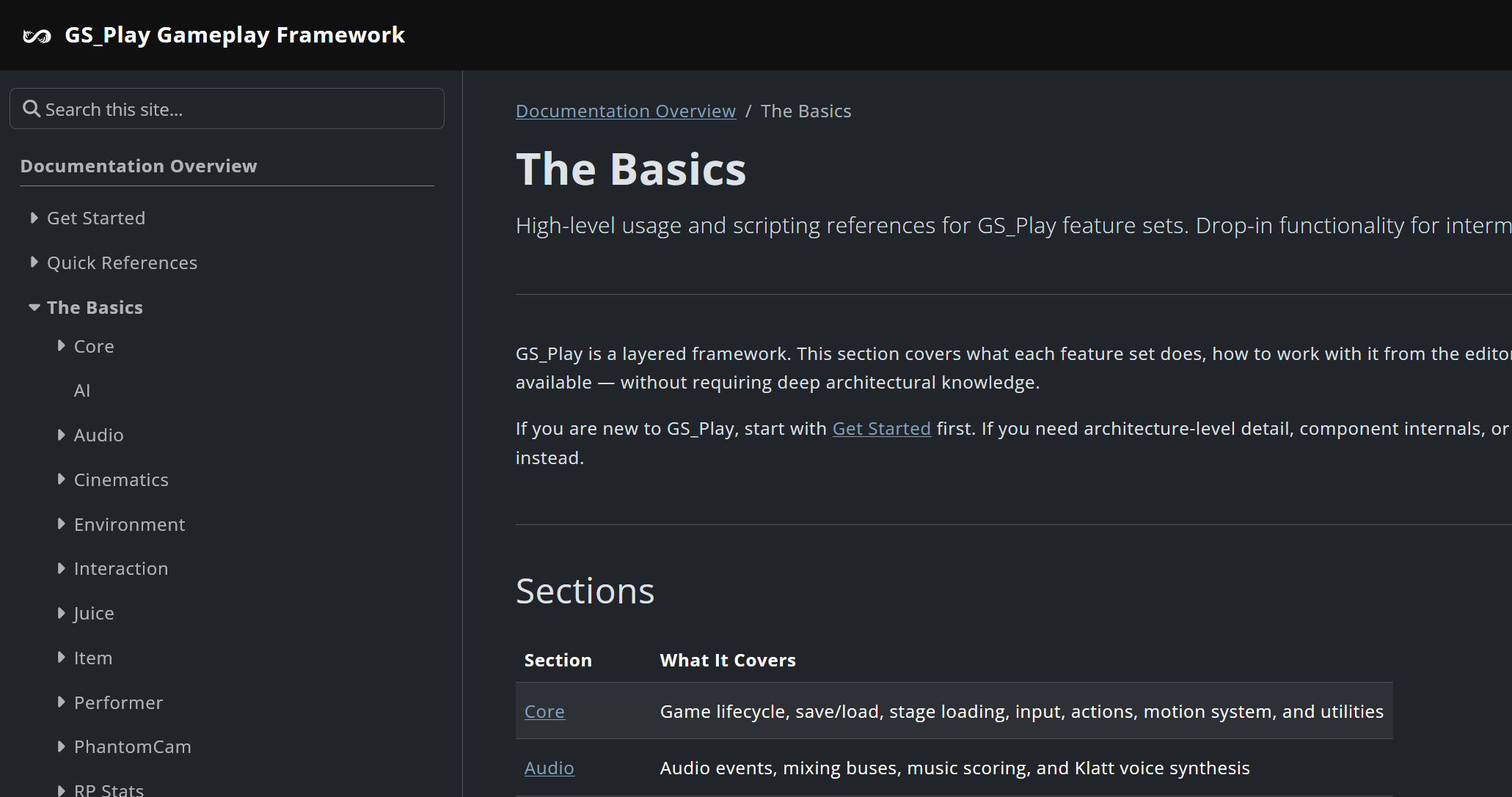
That site we propped up earlier was our GS_Play site! As we bring the technology around, we have to start thinking about it as a pre-alpha product. And as is expected from a product, you need to actually enable users who are outside of your organization, and unfamiliar with the nuances of the technology, to still be able to pick it up and get started.
Ho-ly-cow is this an effort. There are so many facets of it which pile up into quite a formidable task:
Not necessarily critical, but we need to make the actual product pages. “Look at this cool thing!” “Want to buy it?” “Here’s the docs!” “Need support? Contact us!”, and all that flash. While it may not be critical, it was also something that was just the raw template site, with the original stock images, filler words and stuff. You can kick the can down the road, but much like video games, if you leave big, sore marks, people will not believe your project is worth anything. The quality you seek to argue is well worth investing in the product, is IMMEDIATELY undermined by the fact that the site is complete garbage. If you can’t make a site to represent yourself, how could you be expected to make a toolset that someone could buy and use all the way through to production? You can’t.
Next on the block.
The absolute sheer amount of documentation needed. GS_Play is no small tool, and as it grows, it becomes denser and denser with the need for information. To gather every thought, every feature, and every piece of a given feature into a coherent and well-communicated document is gruelling work. Worse still, when you’re foggy and can’t bring yourself to any degree of coherent wording or phrasing of almost anything.
On top of that? Conveyance of information.
Turns out a lot of consideration also needs to go into where you’re putting the documentation. Having Get Started sections, Guide sections, places where you have changelogs and quick links… FINDING the information is as important as the information you eventually DO find. There are no single right answers; the target is ephemeral. You reference other sites, but some aspects resonate with you while others don’t, some have systemic features that you don’t have, or have far more of… You put some good ideas into your section organization, and all of a sudden it feels less potent…
And the fear in this particular aspect is that pain points cause users to recoil and turn away. Enough of it and you’ve lost clients, or worse, pissed off people who have already bought your product. That is baaaaad.
I used to talk to my musician friend about the organization of songs in an album. I found that really considering the progression from song to song actually has a significant impact on having the album capture you and be listened to front to back. There were so many ways one could do it. Gentle start, ramping up. Hard start, ramping down. You could start with sad songs, then break to happier ones. Try to go chronologically, following where each song originated from in personal experiences. They all play out in unique ways and all impact the listener in unique ways… but which one do you choose? It depends on the collection of tracks, your intended listening vibe… none of it has clear answers.
With documentation, it’s similar, but so detrimental when improperly executed… It’s dozens of hours longer, it’s way more dry, there’s such an enormous footprint of information… It’s a staggering task.
And.. gulp… lastly…
There’s legibility…
This is in two forms.
How dizzying a given page of documentation is. Too much and the person glosses over, too little and it doesn’t properly teach anything. I’ve been calling this information density. You don’t necessarily want a monolith. Definitely for that dizzying effect of SO much information in so little space, but ALSO, that the longer a document runs down the page, the easier the lowest information can be lost. If there’s one thing to trust, it’s that users are more predisposed to losing patience than they are going to grant you infinite patience and suspension of disbelief. Make sure they immediately get what they want when they get there.
The other part? Styling.
Yes… Legibility is also aided by properly tuned styling. Like, as in, the website style code. This can be a fun one to poke at, but again, returning to the topic of legitimacy and having your work either enforce that people think you’re top quality, vs mediocre, is in how well you deliver the content to the user.
Thankfully, we have a light-dark mode toggle by default from the Hugo theme. A massive relief on that front. However, that’s the tip of the iceberg. The code blocks in the light mode were DARK, totally betraying the theme. The top menu bar was non-reactive to the change. So the dark black menu bar remained. Those sorts of contrasts are WAY too harsh and immediately look like you don’t know what you’re doing.
But there are far more subtle parts.
Like the spacing of different text elements. Headers, the 1 through 6 layers of emboldened focal text, need to relate to the text they are framing, by default we were seeing them hug the text below while making a very major clearance from the prior text above. Makes sense. Buuuuut… When you were layering sections of information: A major categorizational chunk, with the first sub-chunk immediately following, you’d find that the sections were way too snug. The entire paragraph was a sandwich of HEADER-header-text… so many depths of information, essentially simultaneous. Make page after page of that, and you are ending up at a monolith, EVEN IF it’s only as big as one page.
Too spaced apart, though? And it’s hard to see which relates to what. Blech.
The side nav menu. Every section and subsection in the tree was single-spaced. With as big a collection of subsections as we have, it was so hard to capture what depth anything was and what pages were in any given section. Spaced those out significantly.
One really valuable thing to know also is that in dark mode themes, it’s actually quite important to increase the letter spacing between each character. Not by a significant amount, but the legibility greatly increases when they aren’t exactly side by side. Why? I’m not sure, but it’s a good one to consider.
I like to think that, overall, I’m starting to lock these many things down. The only major one lingering is actually getting ALL the documentation in.
With that underway, I still had to tackle other things.
Taxes. Ew.
Yes, more ew. Lots of ew this month…
Genome Studios has never made a profit or had payroll, which turns out to be good, as it means that “startup tactics” for filing your first taxes were still available to me. Very exciting.
This was also prompted because I am mobilizing with an Accounting firm to tackle my corporate tax returns and apply for the Canadian SR&ED tax rebates, which can be incredible to leverage for tech startups, which we most certainly are.
So. Really nice, actually. Exciting.
And then the government came in. No, not intervention… I went to it. But the processes. Jeez, the processes.
For a small time, Genome Studios was dissolved, a side effect of not filing my “Annual Return,” which is a simple doc that says “Yes, we’re still a company, and yes Gaian still owns the company”. Enough of those missed and they assume that you did in fact stop being a company.
No problem, though, you can restore the company and resume like nothing ever happened. You just catch up with your annual returns, which in a lump sum is a pretty decent dent to an artist’s wallet. But I digress.
Seems like, because of that liquidation of the company, government systems across the board were completely borked for me. Agonizingly simple things ended up stalling me for nearly all of December, and definitely all of January. Argh.
Alberta government, Federal government. Neither knew my company existed, yet all their systems knew to deny my registrations because the company already existed… It was this frustrating mess of calls and emails, going to registries, calling in more things. A great way to suck the wind out of my sails around the excitement of having a financial platform for my company.
But I did it. I finally did it.
Every hoop jumped, every call made, emailing the accountants that I was stalled, and continued to be stalled, every few weeks. I finally did it.
Now I have our first onboarding meeting lined up right away here, and I am so glad to be done with that onslaught! I never imagined I’d be saying this, but I’ve never been so glad to only have to worry about my corporate taxes.
Speaking of Onslaughts.
You thought I only had to worry about my documentation, obviously. But y’know what’s more important than documentation? Actually having a product that works at all…
Absurd, I know, but I can’t argue it. Spoiled clients.
I’ve been calling it “Crystalizing”.
Not only are you working on stability, ensuring things work and things, you’re also working out the entire framework from an outside-in perspective.
Having been doing C++ development in O3DE for nearly a year now, my original sensibilities have largely been overwritten with actual learned sensibilities through using the codebase.
I had to change the naming of all my ebusses, the core pillar of the engine, from “Incoming” and “Outgoing”, a naming convention that helped me think about what direction a class’s methods were being called for, into the far more standard and expected: “Request” and “Notification” naming. It’s now clearer to me why it’s used, and, even beyond my own belief in the naming, it’s what’s regularly used in the entirety of the source code of the engine. That means it’s industry standard and the default expectation when interacting with tools within the engine. Sweet.. that’s like 150 changes…
Lel, but if you’re changing buses, why are they still in the headers of their owning class?
Yessss… when I had started, GS_Play was formatted far differently than most features in the engine. Because for O3DE, they were endpoint features, where a user simply uses what it does; they are built to hide nearly all the source code in “Private” compile targets. Leaving only the buses, which talk to the underlying system, accessible as an “API” target.
For GS_Play, we are providing a great number of classes that are meant to lay the groundwork for systems, then allow the final user to extend the classes and make their own permutations. This feeds directly into our key “extensible” selling feature offered by the framework. Well, easy enough, you make the classes available as well, if you need the bus, you probably need the class too…
No.. You really don’t. There were so many times where it ended up being a detriment to have the class and the bus combined in the same file…
Okay, fix it, dust your hands off, move on.
There go another 150 files changed. And furthermore, 150 files added. Yay.
Very necessary work, but JEEEZ is it dry. A great target for automation.
The vast majority of this work and the renaming I had pushed on to Claude. The mind-numbing labour behind it, with no real material worth to me as a person, makes it the perfect task for the machine to do. Great, but it also meant a massive processing time to address ALL the content it had to change. Additionally, there’s no avoiding it; I had to also evaluate that everything was done successfully. Really, whether it be done by LLMs or by myself, you just HAVE to verify everything is working. STILL mind numbing, one way or another.
Awesome, crystalization finished.
…
Crystalization finished, right?
…

Ahhhh… ehh… mmm… If I AM crystalizing, I should probably tackle other boilerplate necessities…
With the newly minted Class Creation Wizard, which I finalized this month, we can now make pretty well EVERY extensible class into its own generable template! But.. that also means we need to make the templates at all.
Also, if we’re organizing all the buses and classes… We should organize the ENTIRE file structure. Get features into their own folder designated to their featureset. Organize Utilities into their own subcategories… Just overall build out the organization and intuitiveness of the codebase. Another pillar of our sales pitch: “Intuitive Features”. If we want to ensure we match the quality we claim to be, we can’t really put that off…
Oh, and now with the re-ordering of the codebase, classes are failing to compile, as the execution order of compiling files changed, and lucky little overlaps that preserved the code compiling are jostled loose. Really, a lot of the issues that arise can be handled by one additional utility… But now we need to apply that utility all over for consistency and the stability we’re looking to realize…
But if we’re simplifying and cleaning things up with new boilerplate utilities, why don’t we resolve some lingering systems that are duplicated across featuresets, that could all have a central structure, then extend them to realize their own functional needs?
AAAAAAAAAAAAAA!!!!
Oh, and in case you didn’t know…
AAAAAAAAAAAAAAAAAAAAAAA!!!!!
Ehem. But, among all this, I got a chance to try at something I’ve been meaning to do for a while: Using cosmetic reflection commands to create clearer organization and understanding around components in-editor. Insofar as I’ve gone, everything was just one raw list of variables one after the next. Turns out you can make groups and create labels. You can override ANY variable name and replace it with your own naming… There are some cool things you can do!
So while tackling alllll these revisions, and fixes, and adjustments. I tried to squeeze in some formatting passes to the reflection.
We end up with things that look like this.
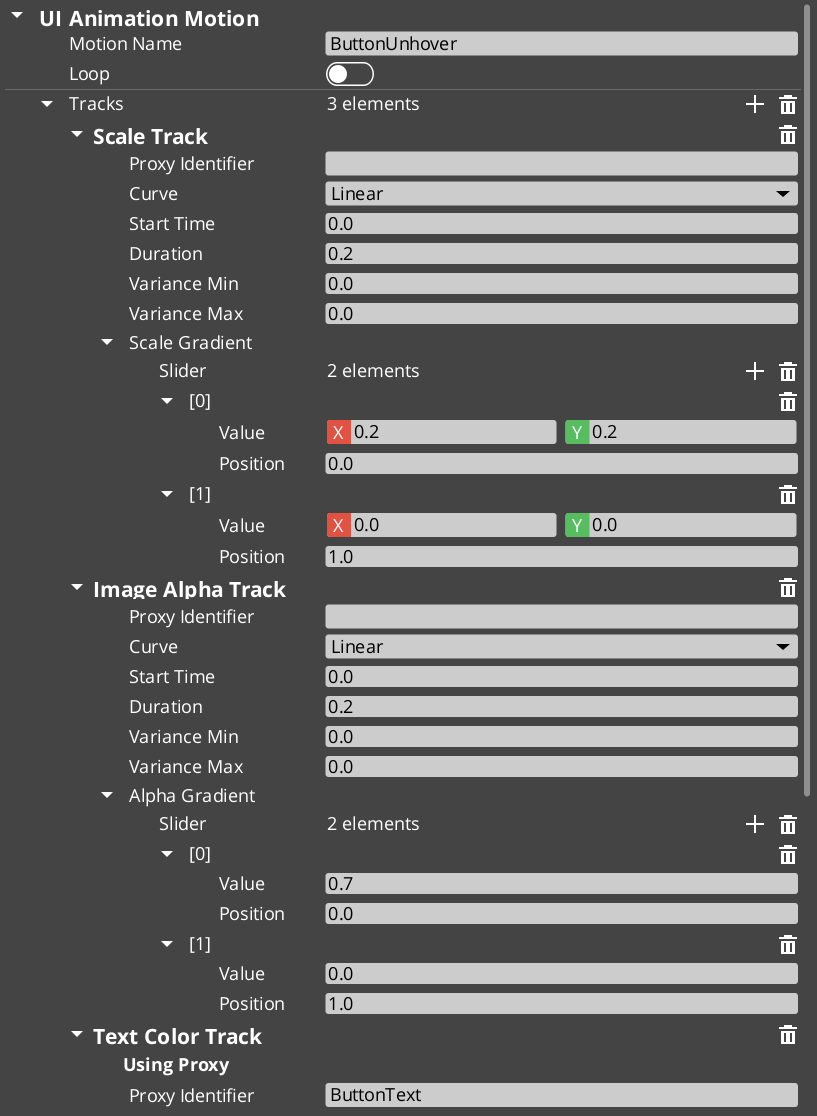
There’s little documentation around it, which is another task I eventually need to tackle. But I’ve made an issue of it already.
Nice, in all this grind to get the systems to be completely unchanged, but better, to actually be able to influence some forward change and bring out a much richer line of communication to the user actually making the games with the tools. Is definitely a moralizing win there.
Next new major task?
Legal… Ew..
Yeah… Ew… Buuut. Kinda like the accounting and tax stuff, it’s actually getting pretty cool to NEED to realize legal channels in the business. It’s not the first time, but I’ve been in a legal standstill for quite a bit of time, waiting for the time to strike.
And that time is now, finally.
Because selling a licensed asset requires, would you believe it. A license contract. With terms of ownership and all sorts of complicated details.
Woah.
Yeah, woah. Like, holy crap. We’re at the point where we’re making documentation, crystalizing the technology, drafting legal contracts, propping up product websites… Is this actually really happening?
Actually yes. It’s really happening.
oh no.
This is getting too real. And all jokes aside, really terrifying. Like REALLY.. terrifying…
You’re not just some weiner kid with dreams that “one day” you’re going to make games and people are going to like them. You’re not just some young adult going “yeah, it’s not so easy, you have to make a business as a game developer”.
You’re now the present person you are, trying to levy clientele into using your business products and development services.
And even more scary?
You do have an interested party. Someone you actually need to deliver on in these many angles of service and product quality.
Sure, you do it because of the theory, but now you definitely need the theory to be correct and the efforts you did make to actually deliver on what that theory is supposed to give you; convincing a person, ideally more than one, to spend money on you. Quite a lot of money, too.
Please excuse me while I have a month of health crisies.
Ahhh~ Better. Moving forward.
Meetings, discussion, planning, pitching… And it seems we haven’t scared anyone off yet…
But this brings up a pretty big question. One that, in my loose dreamy ambition have never had to actually consider.
What is our worth?
oh no.
Yeah, not only are you selling yourself, you’re ASKING FOR MONEY FROM THEM.
Oy oy oy… The realness is many layers of lead blankets on top of each other now.
That aside, let’s look at my reasoning as we progress through this process:
Firstly, we’re looking to sell GS_Play openly as a purchasable asset. Because of that, we are looking to relate to the many established marketplaces and their pricing scales. This is because we can be sure that people are willing to pay for the most powerful and prolific assets at the pricepoint they are set at. Otherwise, the feature would not be so prominent.
Makes sense… And in the past I loosely threw a general scope together for it based on my experiences buying tools in the Unity asset store. With the original featuresets (10), and the general pricing highs and lows depending on the feature, like Dialogue System for example, I was looking at ehh.. maybe $1000 USD. A bit more than that, but it’s kinda a tall order to ask someone to buy a game engine tool for over 1k in one lump sum. Of course, this is for the ENTIRE suite of 10~ tools. It would be like buying nearly every tool-based asset I own in Unity at once. So like.. don’t sweat it.
I float that pricepoint around and? – “So cheap? Like, are you sure?”
Oh.. Yeah… turns out privately licensed toolsets licensed directly from company to company are sold for ASTRONOMICALLY higher prices than that. Especially noteworthy because this framework is even more fully featured than many of those privately licensed tools. In public terms, you can look to FMOD or WWise for an audio toolset licensed directly to companies. They aren’t charging a flat $1000 and calling it quits.
Now I’m sweating. Turns out, in the vast theories I am tossing around all at once this month. It ALSO looks bad if you UNDERVALUE your technology. It speaks to a lack of confidence in its ability to deliver on what you’re saying.
This and many of the appearance-based things I’ve covered today apply to game development as well. So heed these insights.
Alright.. Wake up, snap out of it, it’s business time.
Like REAL business. Holy… Scramble? I think I’ll scramble.
Okay, market study. What are things actually selling for?
Unity is a massively established engine. It forces pricing down because of the massive install base that makes your tools sell in quantity. C# is less boilerplate and can’t be expected to provide massive performance, unless you get source access to Unity, in which case those assets cannot interface unless you programmed it all in yourself.
Okay, Unreal Marketplace. UE is C++ based, the install market is higher professional levels on average (ish). They do STILL have a massive install base, but the, now, Fab market also has a higher standing valuation. Assets go for $100 or $200, instead of Unity’s $30 to $80, if you will. Of significant note as well. The assets I looked at on fab have a company scale license: Under, and over $100k revenue. Driving many of the assets to far greater heights of cost, and actually showing that even in the open UE market, you can ask a real company for $500-1000 for even one feature, if it’s substantial enough.
Okay, okay, okay, okay, okay…
So I start to scour. Find the most expensive of each and every featureset we’re providing (15), even multiple features if a GS_Play featureset accomplishes a combined set of assets. Pick THE most expensive of each one.
Wowee.. that price is starting to get up there.. but even so, this really reads like a marketplace level pricing scale. A concept for part of our licensing scheme is the same “scale of business” metric as UE, but instead, seats using the toolset. Truly, we want indies and small-scale people to still access the tools, but if you’re running a budget that would make us sweat, and that’s just for some random project, I think you might be able to afford a bigger licensing cost…
So we broke it out into: Indie, Studio, Corporation, Enterprise. The price from Indie to Studio lept up there, and then scaling up to enterprise got crazy.
Where we’ve rested at by this point? $2200 USD for the entire GS_Complete suite for Indie license. Yowza. And a little over a quarter million for the enterprise, unlimited seats, license. That’s $277,000.00 USD.
Come on, what are you saying? A quarter million? Ha…
Yeah, I agree. That’s an insane cost… but like.. that’s all I keep getting told. So I consult a mentor of mine. I say I’m not looking to necessarily evaluate my pitch, but let me run you through the entire suite, and then from your understanding of that, let’s look at the pricing, and you tell me how it looks. She is a company owner, she has worked with other companies, she’s bought and sold technology; this isn’t a perspective that comes from ignorance.
“Yeah, the quarter million pricepoint for Enterprise reads correct.”
Whaaaaaaaaaaaaaaa?
WHAAAAAAAAAAAAA???
This is a scale I cannot even fathom. I have never imagined ever tossing around that amount of money. The only thing in my life I’d ever imagine that amount of money happening is on a downpayment for a house, which is definitely not throwing around some cash. That’s a terrifying life choice that needs a lot of care to determine.
Buuut, with a team of 40, with a budget of AT LEAST 10 million. What’s a measly $250k if it means you can prototype, scale, and output a title using a toolset that’s currently one year matured, and will mature steadily for the entire lifetime we support it?
Terrifying.
Okay. If you say so… So, well. I started putting together the “2026 Genome Studios Price Catalogue”.
In it, we capture the pricing for both the Complete license and each individual featureset alone, framing the discount you get by buying the total package versus all of them apart. A nice deal.
Not only that. We capture some pay scales for contracting Genome Studios production services. The key to, all this is: “Sure you can get GS_Play, but who would you trust with your project using it than the people who intimately know how to use it? Us, Genome Studios.”
And, well, a Hail Mary: You can also subscribe to use our server infrastructure. That means you can immediately have a build and deploy engine pipeline, host your own Hugo-generated sites on pages, and use all the many services we have for development. Easy peasy, and far cheaper than commercial equivalents.
Pretty cool, I’d say. In a vacuum.
But again. What is going on?! This is actual business. Well-researched pricing? Catalogue of services? Infrastructure? Documentation? Technology stacks and products?
This is a domain completely alien to me.
My professional experience, as most people have, is completely shielded from these sorts of things, as I was just a grunt doing the production work. Being outside of that and actually doing the dance, figuring out the business things. It’s crazy to think I find myself here.
All this being said, the fear and terror, the staggering reality of it all.
It’s actually really, really cool. This is something I’ve worked to become as Genome Studios for 16 years now. These are the terrifying realities that happen in one’s march towards realizing an actual, real and functioning business.
I have been earning the right to confidently offer these services and prices from a lifetime of career development, struggle, and strife. Asking for these sorts of prices is actually the real value we’re creating. It’s the benefit of being industry leaders in this engines ecosystem, a calculated effort from the beginning.
We are on the board, actually playing the game, and we have every reason to trust that we should be here.
Now, we have to actually perform. This is finally our time to act, build, and establish a strong-standing business. Something that can allow us the liberties to be flexible around our health, to give us space to develop our internal projects, to sustain ourselves with exciting and cool opportunities through GS_Play and our offered services.
This is making a Game Production Company.
All this month has been dotted with these many tasks I’ve described above, in no particular order. This is a month of upheaval, but matches the vision that I held entering this new year. We are making our stand, establishing ourselves, and showing our legitimacy. And it’s only been two months. We’ve got a lot more to show off, and a lot more to do.
So thank you for coming along for this journey through February. It’s been a ride. I look forward to regaling you with ever more adventures on our path to deepening the realization of Genome Studios.
Till then!
Btw, you can now rep Genome Studios on Discord with our brand new shiny server tag! Every bit counts!

P.S. Did you know you can keep up with our Month in Reviews by signing up for our newsletter? Just check below!
Want to keep track of all Genome Studios news?
Join our newsletter!